Swedenborgians
Uncle SilasThe Swedenborgians are a religious movement that gives spiritual language to some of the novel’s most consequential uncertainties: what happens after death, what authority visions possess, and whether religious profession signals genuine faith. Maud encounters the movement through her father’s beliefs and Doctor Bryerly’s visits, but knows little about its teachings; that gap allows inherited rumor, private grief, and religious conviction to overlap without becoming identical.
Identity and Reputation
Maud’s father had left the Church of England for an unnamed religious sect and, she was told, eventually became a Swedenborgian. He did not explain the movement to her. The household nevertheless continued its customary Sunday visits to the parish church: Maud, Mrs. Rusk, and her governess went in the old carriage, while her father corresponded with the minister of his own church. His religious life was therefore private and largely separate from the family’s public routine.
The movement reaches Maud first through hostile, imprecise accounts. Mrs. Rusk calls its members rubbish and associates them with visions and conversations with angels, although the narrative admits that she may have no basis for these charges beyond conjecture. When Doctor Bryerly is expected at Knowl, Mrs. Rusk repeats the rector’s description of him as a great conjurer among the Swedenborgians. The mixture of sectarian suspicion and supernatural rumor precedes Maud’s acquaintance with him, giving his arrival an air of mystery before she understands his connection to her father.
Visions, Death, and Maud’s Understanding
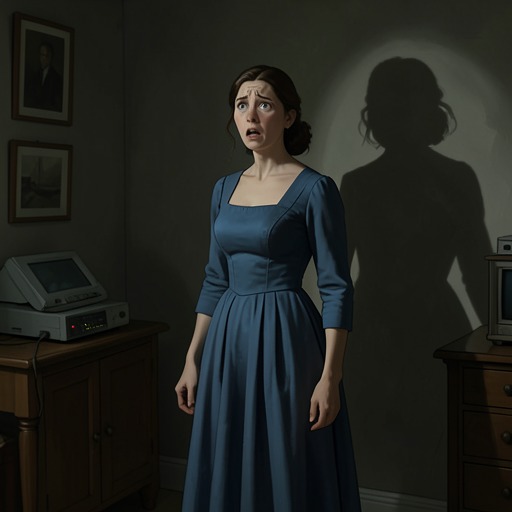
The Swedenborgian idea most directly presented to Maud is that Swedenborg could perceive spiritual truths beyond ordinary human sight. Her father tells her that Swedenborg sees beyond a high wall and has said that her dead mother is not there. Maud hears this as evidence that her mother has been taken away, and her grief turns the claim into an urgent question about where she has gone. The scene shows how an account of spiritual perception, offered as reassurance or knowledge, can intensify a child’s fear when she has no framework for interpreting it.
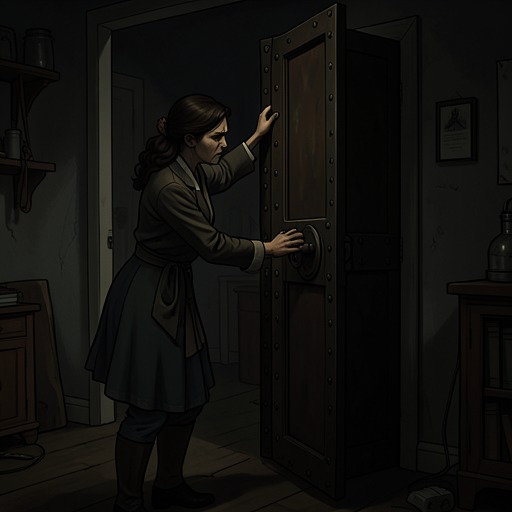
Her father then describes death as the gate through which people return home, and speaks of a door opening when the time comes. The image makes the afterlife both distant and certain: it cannot be reached by walking, but is approached by everyone in due course. Mrs. Rusk reacts to the account with alarm, condemning the walk in the wood as dangerous. Her response reinforces Maud’s sense that Swedenborgian teaching is entangled with a threatening supernatural world.
Maud later reflects that she knows little about the Swedenborgians beyond Mrs. Rusk’s inaccurate talk and the brief appearance of a few members in her restricted early life. She once tries to read one of their books about heaven and hell, but becomes nervous and puts it aside. Her eventual understanding is cautious: she knows that the movement’s founder either saw or believed he saw visions, and that, as she understands it, those visions interpreted rather than displaced the Bible. Because her father accepted the movement’s ideas, she takes comfort in believing they did not conflict with Scripture’s supreme authority.
Doctor Bryerly and Family Affairs
Doctor Bryerly makes the movement visible in the household as a person and a source of influence. Maud first hears that he is a Swedenborgian through Mrs. Rusk and the rector; his tall, lean appearance and reserved manner do little to correct the fearful reputation already attached to the sect. After one unexpected visit, he meets privately with Maud’s father twice in the study. Her father seems unusually dejected, and Maud lies awake wondering what lies behind the connection. She comes to detest Bryerly because his presence appears to cause pain to someone she loves, while recognizing that she does not know the reason for it.
Bryerly’s place in the family’s legal affairs complicates that suspicion. He tells Maud that her father had nearly joined the Swedenborgians and had corresponded with Henry Voerst, one of the movement’s prominent members. Bryerly also says that he is an executor under the will, though he was not consulted about its provisions; he claims to have protested against its unusual provision and says he is acting from a sense of duty. His religious affiliation is thus linked not only to private belief but to the practical arrangements surrounding Maud’s inheritance and guardianship.
Later, Maud’s father turns the same affiliation into an accusation. He depicts Bryerly as a sly, money-loving Swedenborgian who has obtained a substantial position among the trustees of Maud’s property. His speech uses religious imagery to question Bryerly’s motives, while also defending his own conduct as guardian and tenant. The conflict leaves the movement’s public identity unresolved: a person’s membership does not settle whether he is sincere, self-interested, or trustworthy.
Faith, Reputation, and Uncertainty
The Swedenborgians also shape how Maud interprets her father’s religious life. After his death, letters from him reveal a variable mixture of querulous or abject passages, noble sentiments, prayers ending in doxologies, and disordered religious speculation. Some of the language seems closer to Swedenborgian visions than to the Church of England. Monica reads these papers with detached recognition rather than Maud’s solemn interest, making the letters evidence of a character she believes she already understands as well as records of belief.
The movement becomes part of Maud’s grief and fear near the end of her father’s life. In a storm-darkened mood, she wonders who the Swedenborgians were who had gathered around him, and whether their hold on him was good and true or heretical and dangerous. Bryerly’s unexplained authority is, in her imagination, almost supernatural. This is not proof that the movement exercised the sinister power she fears; it shows how bereavement, isolation, and incomplete knowledge make religious affiliation difficult for her to separate from threat.
The novel finally refuses a simple verdict on the faith associated with Maud’s father. Looking back after her uncle’s death, Maud cannot determine whether his religion was wholly hypocritical or ever sincere. She allows that he may once have believed himself righteous and hoped for heaven, but describes temptation and worldly desire as forces that compromised that hope. Swedenborgian language therefore belongs to a broader moral uncertainty: religious visions and professions may offer genuine belief, but they cannot by themselves establish a person’s integrity. The movement’s narrative significance lies in that unresolved distinction, as its ideas about spiritual sight and the life after death coexist with rumor, family conflict, and doubt about the people who invoke them.